
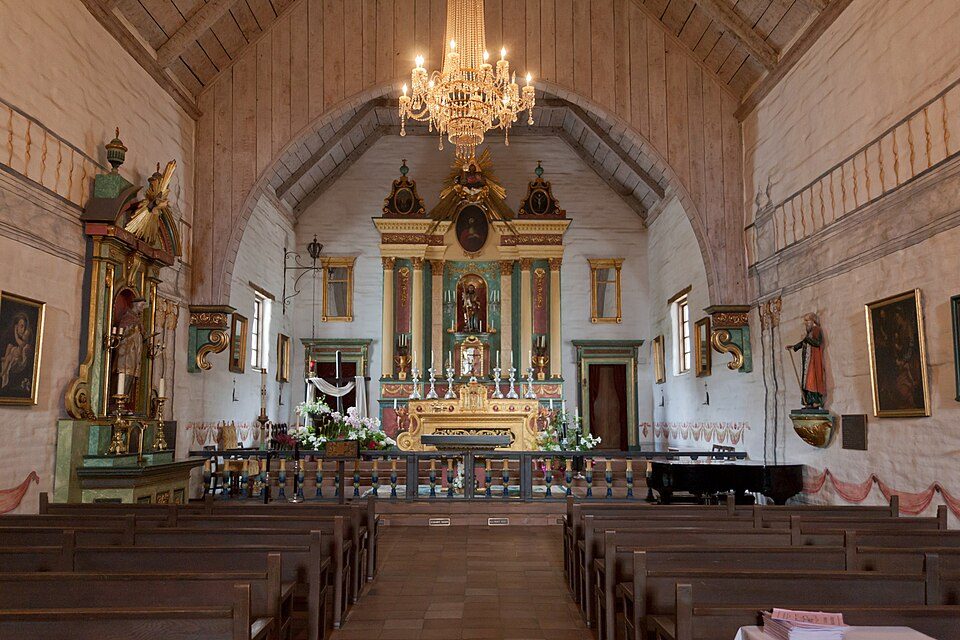
Mission San José is one of California’s 21 Spanish missions and the historic heart of the Mission San Jose district in Fremont, California. Founded in 1797 at the foot of the hills on the east side of San Francisco Bay, the mission grew into a major agricultural center before an earthquake destroyed its original church in 1868.
Today a carefully reconstructed adobe church and a surviving section of the original mission buildings preserve its history, while the surrounding district retains a small-town character within a large and growing city.
For Fremont residents, Alameda County families, and anyone interested in the long history of the East Bay, Mission San José offers an essential view of how the region took shape.
The Founding of Mission San José
Mission San José was founded on June 11, 1797, by Father Fermín Francisco de Lasuén, becoming the fourteenth mission in Spanish Alta California. Its site was chosen for its fertile land, reliable water from nearby creeks, and its position along the route between the missions of Santa Clara and San Francisco.
The area had long been home to Ohlone people, whose villages and seasonal camps spread across the East Bay. Mission life brought dramatic and often devastating changes to these communities.
Native people were brought into the mission system as laborers and converts, and disease, forced labor, and the loss of traditional land took a heavy toll.
Their labor built the mission’s buildings and worked its fields, orchards, and herds, which made Mission San José one of the more productive missions in the chain during the early nineteenth century.
Earthquake, Reconstruction, and the Mission Today
After Mexico secularized the missions in the 1830s, Mission San José’s lands were divided and its population declined. The mission church remained in use until October 1868, when a major earthquake on the Hayward Fault severely damaged the adobe structure. A wooden church was later built on the site and served the community for more than a century.
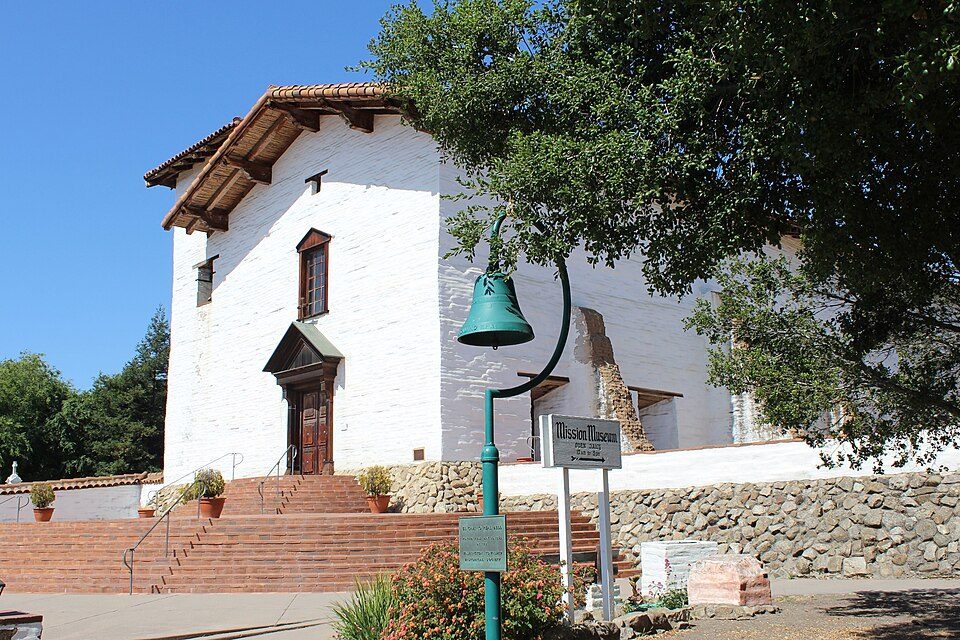
In the late twentieth century, a restoration effort replaced the wooden church with a reconstruction of the original adobe church, completed in 1985 using historical records and traditional building methods.
A section of the original padres’ living quarters survived and now houses a museum with exhibits on mission history, Ohlone life, and the region’s early settlement. Mission San José publishes current information on visiting the church and museum, along with historical background on the site.
The Mission District and the Formation of Fremont
A small town grew up around the mission during the nineteenth century, serving surrounding farms, vineyards, and orchards. The town of Mission San Jose developed alongside other nearby communities in the southern East Bay, including Centerville, Irvington, Niles, and Warm Springs.
In 1956, these five communities joined to incorporate as the City of Fremont. Each kept its name as a district, and Mission San Jose remains one of the city’s best-known neighborhoods.
Its historic core along Mission Boulevard still includes older buildings, local shops, and the mission itself, giving the district a distinct identity within the larger city. The City of Fremont documents the history of its founding communities and the 1956 incorporation that brought them together.
Bay Area Climate and the District’s Setting
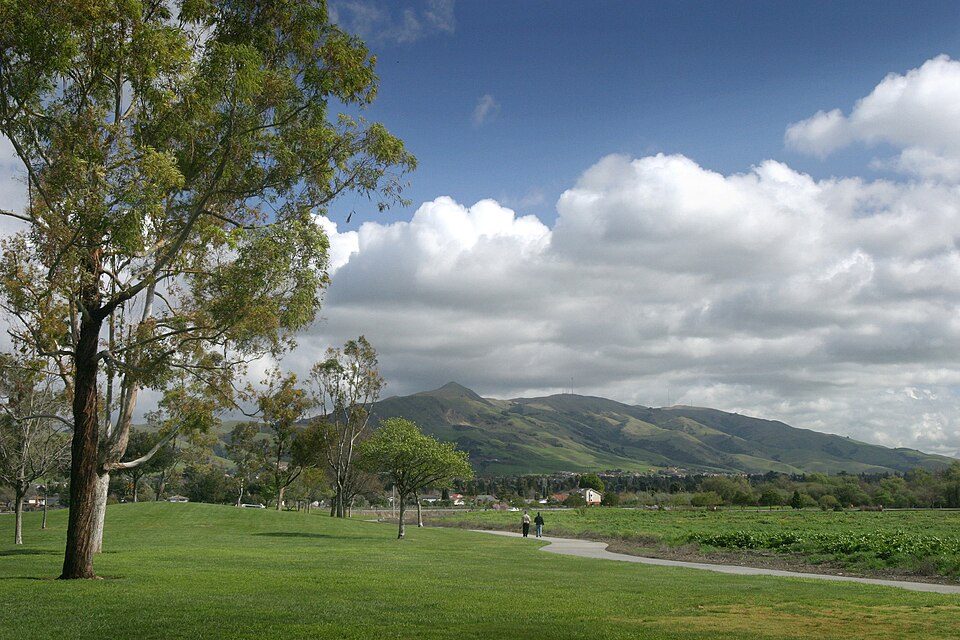
The Mission San Jose district sits at the base of the hills that rise toward Mission Peak, a landmark summit visible across much of Fremont. Its location gives the district a slightly warmer and drier feel than neighborhoods closer to the bay.
Normals from San Jose International Airport, about 15 miles south, show July highs in the low 80s°F, January lows in the low 40s, and roughly 13 inches of annual precipitation, according to NOAA climate data for the San Jose area. This Mediterranean pattern of dry summers and mild, rainy winters shaped the mission’s agriculture, supporting grains, grapes, and orchards in its early years.
Today the same seasonal rhythm turns the hills green in winter and spring and golden brown through the dry summer and fall. The changing color of the hillsides above the mission is one of the district’s most familiar sights for residents.
The Mission District’s Place in Fremont’s Identity
Mission San José connects present-day Fremont to more than two centuries of history. The mission’s story includes the Ohlone people who lived in the area long before Spanish arrival, the founding of the mission, the rise and decline of the mission system, and the growth of the farm towns that later became Fremont.
Visitors to the reconstructed church and museum encounter that history in a setting that still feels rooted in the past.
The surrounding district also reflects how Fremont grew from separate communities into a single city while keeping each area’s character.
For many residents, the Mission San Jose district remains a place where the city’s older identity is easiest to see. For Alameda County residents and anyone exploring the history and community character of Fremont, California, Mission San José and its surrounding district remain a lasting link to the region’s past.
← Back to all articles


